
The Path Of The Buddha
The Mystic Way Of Fulfilment & Wonder
The Four Noble Truths
The Dharma & The Teachings of the Buddha
The Buddha’s sermons & teachings pointed toward the true nature of the universe, what is now referred to within Buddhism as The Dharma.
Gautama Siddhartha, the once prince, once monk – who became a true world teacher of enlightenment called the Buddha – gave his first philosophical sermon on the outskirts of Varanasi at a deer park called Sarnath.
This first sermon presented an overview of the truth of mortal/material suffering, as well as the path out of that suffering, now enshrined as ‘The Four Noble Truths’ and ‘The Eightfold Path’.
Much like a physician who expertly diagnoses an illness and then suggests the cure, the ‘Four Noble Truths’ diagnosis of the Buddha’s teaching follows this core revelation:
The Four Noble Truths
1. All Life Involves Inherent & Inexorable Suffering (aka Duhkha).
The ‘illness’ that the Buddha diagnosed as the core condition of the human mind is called ‘Duhkha’, an ancient Pali language term found in ancient Indian literature, meaning anything that is ‘uneasy, uncomfortable, unpleasant, difficult, causing pain or sadness’.
It’s also a basic concept in Vedic religions about the nature of life that innately includes the unpleasant, such as suffering, pain, sorrow, distress, grief, or misery.
The term Duḥkha doesn’t translate into a single English word, but embodies all aspects of unpleasant human experiences.
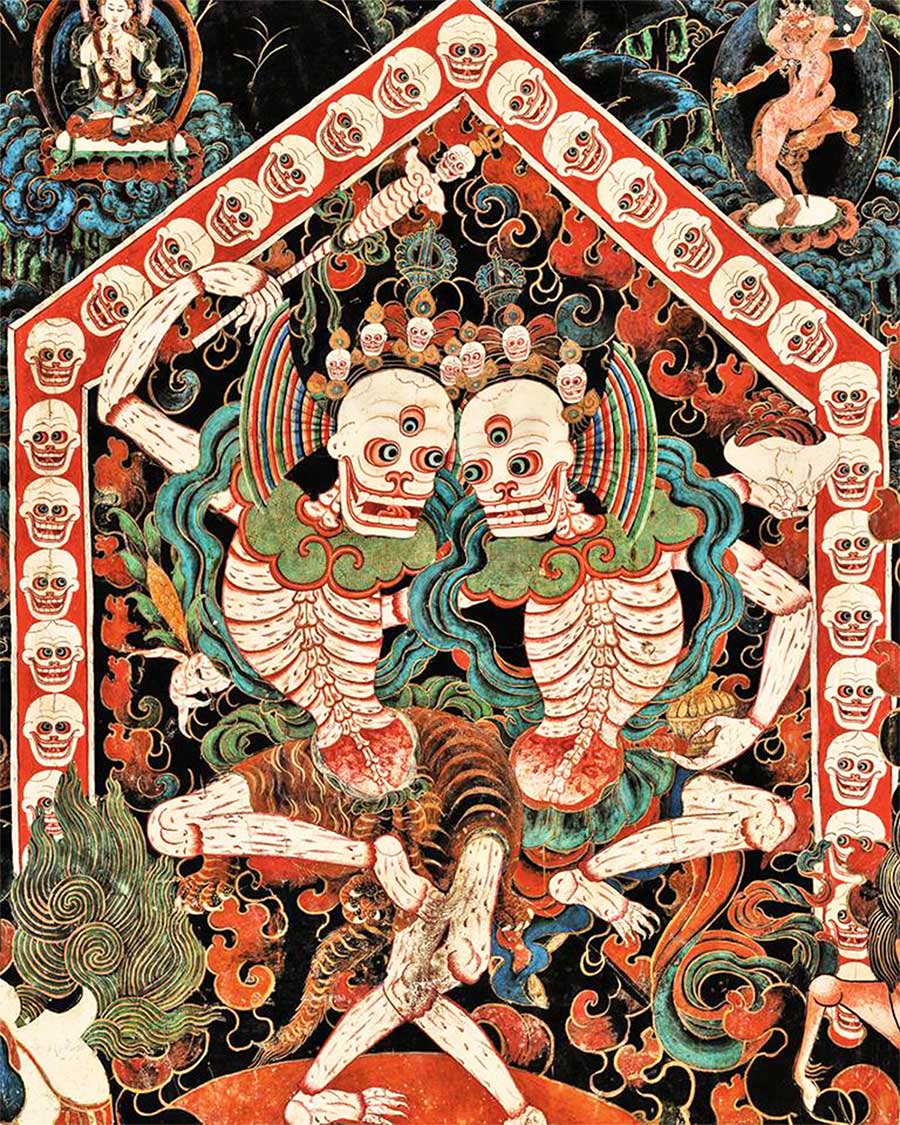
The Buddha spoke of three types of this state of suffering;
First, there is the ordinary suffering of mental & physical pain.
Second, there is the suffering produced by unending change, the simple fact that all things -including happiness feelings & bliss -are impermanent, as is all life itself.
Third, there is suffering produced by the failure to recognize that nothing stands alone, but that everything & everyone, including what we call our own ‘Self,’ is conditioned on and interdependent with everything else.
2. Suffering Is Caused By Attachment To Our Desires, To Our Perceptions, And By Our Grasping On To Material Existence.
The Buddha saw that the impulse to crave, desire, or grasp on to anything one doesn’t have is the principal cause of suffering.
Because of the impermanence and continuous change of what we call ‘reality,’ the attempt to hold on to any of it is as doomed to frustration as an attempting to hold on to a piece of a flowing river.
Believing that one could be fullfilled by Things rather than by Being is nothing more than an empty promise, a castle built of sand, and a delusion to be defeated & abandoned.

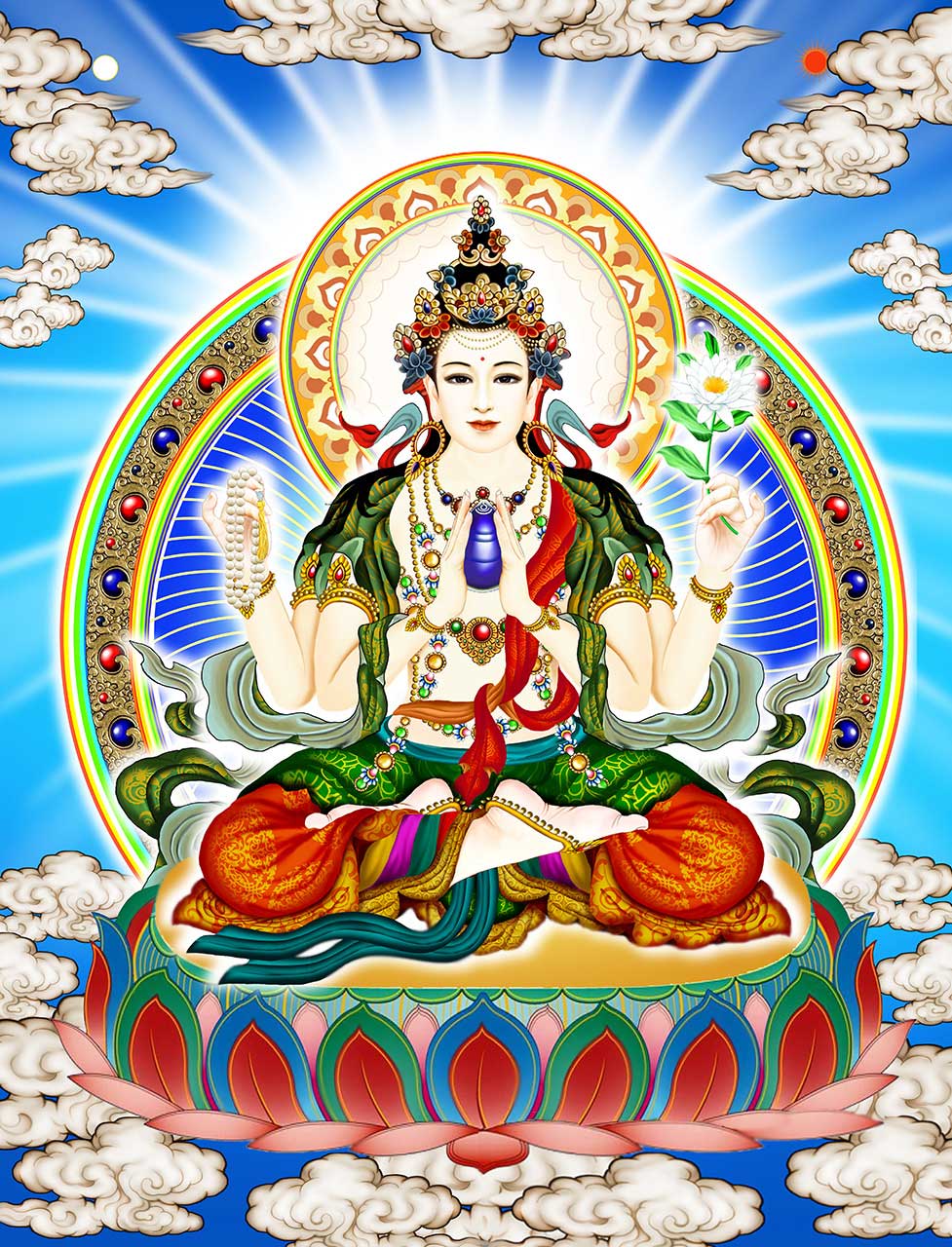
3. There Is A Path Out Of Suffering.
This is the good news of the Dharma teaching; That it is possible to put an end to the trap of egocentric desire, to put an end to the endless suffering of life, and to attain personal freedom from the overwhelming sense of life as being a meaningless and perpetually disappointing state of discomfort & loss.
The Eightfold Path
Right Understanding. Really knowing & accepting that all unwholesome/negative thoughts & actions have direct consequences, as do wholesome/positive thoughts & actions.
Right Intention. Recognizing & accepting that actions are shaped either by desires/habits of destructive anger & self-centeredness, or by desires/habits of compassion, understanding, kindness and love.
Right Speech. Recognizing the power & moral implications of your speech, and embracing the positive power of living in truthfulness.
Right Action. Observing five precepts at the foundation of all personal morality: not killing, not stealing, not lying, not engaging in abberant sexual misconduct, and not clouding one’s mind with debilitating intoxicants.
Right Livelihood. Earning a means of living that is consonant with the basic precepts of honesty, service, fair dealing, & not causing intentional harm.
Right Effort. Cultivating this ethical path of living with the clear attention, the patience, and the enduring perseverance it takes to achieve meaningful attainment.
Right Mindfulness. Developing ‘presence of mind’ through the moment-to-moment awareness of meditation practice, including mindfulness of breathing, mindfulness of walking, and mindfulness of bodily sensations. The subduing of random mental & reactions and developing a clear dispassionate observation of the actual present moment.
Right Concentration. Developing the ability to bring both the wildly dispersed & distracted mind and heart to a quiet, centered focus, and to experience clearly through that focused mind & heart the true state of universal oneness.

Legendary Buddhist Figures
A Gallery Of True Dharma Legends, World Teachers, Monks & Lamas, Kings & Emperors, Scholars & Empire Builders, All Of Whose Mystic Teachings Profoundly & Forever Changed The Fate Of Humanity.

Ananda
The Buddha’s Cousin, Personal Attendant and Chief Disciple

Padmasambhava
Indian Founder Of The Nyingma School of Tibetan Buddhism

Katyayana
Chief Disciple & Foremost In Explaining The Dharma Teachings

Karmapa
Founder Of Karma Kagyu Lineage Of Tibetan Buddhism

Asanga
Founder of Yogacara & the most important Mahayana philosopher.

Naropa
An Indian Buddhist Mahasiddha (Ultimate Guru/Teacher)

Bodhidharma
600BC Monk Brought Buddhism to China, the first Chinese patriarch.

Milarepa
Considered Tibet’s most famous yogi & poet, an example of the Buddhist path.
Marpa Lotsawa
Founder Of The Kagyu Lineage Of Tibetan Buddhism
Kublai Khan
Mongol Khagan & Buddhist Founder Of The Yuan Dynasty Of China
Hōnen
Nippon Founder of Jodo-Shu Pure Land Buddhism In Ancient Japan.
Anawrahta
Founder Of The Pagan Kingdom in 1015, Introduced Theravada Buddhism In Burma & Ceylon.
Ashoka
Greatest Emperor Of India & First To Send Missionaries Around The World.
Tenzin Gyatso
14th Dalai Lama, Born Lhamo Dhondup, 6 July 1935. He Is The Current Dalai Lama.
Jayavarman VII
Buddhist King (c.1181–1218) Of The Khmer Empire. Built Ankor Wat in Cambodia.
Kalu Rinpoche
Buddhist Lama, Meditation Master, Scholar & Teacher, and one of the first Lamas to teach in the West.
The Ancient Way Of The Masters
At vero eos et accusamus et iusto odio dignissimos ducimus qui blanditiis praesentium deleniti atque corrupti quos dolores et quas molestias excprovident, similique sunt in culpa qui officia deserunt mollitia animi, id est laborum et dolorum fuga.
Et harum quidem rerum facilis est et expedita distinctio. Nam libero tempore.
cum soluta nobis est eligendi optio cumque nihil impedit quo minus id quod maxime placeus, omnis voluptas assumenda est, omnis dolor repellendus.
At vero eos et accusamus et iusto odio
At vero eos et accusamus et iusto odio dignissimos ducimus qui blanditiis praesentium deleniti atque corrupti quos dolores.
dignissimos ducimus qui blanditiis praesentium
At vero eos et accusamus et iusto odio dignissimos ducimus qui blanditiis praesentium deleniti atque corrupti quos dolores.
pa qui officia deserunt mollitia animi, id
At vero eos et accusamus et iusto odio dignissimos ducimus qui blanditiis praesentium deleniti atque corrupti quos dolores.